
Fashion has always been more than clothing for me. It is memory, inheritance, and question all at once.
This year marks the first year I decided to design my first official collection and showcase at the 2025 Hmong New Year, and I am calling it “VANG: Between Threads“
I wanted to create a space where tradition meets choice, where culture is not fixed in the past but actively lived, negotiated, and reimagined.
As a Hmong Australian, I work with an awareness that our cultural expressions are often misunderstood, simplified, or expected to remain static. Yet Hmong identity, like all living cultures, has always adapted across borders, generations, and circumstances. The garments I entered in the Fashion competition explore that tension:
What we inherit, verses
What we carry, verses
What we choose to transform.
Grounded in Indigo: May & James
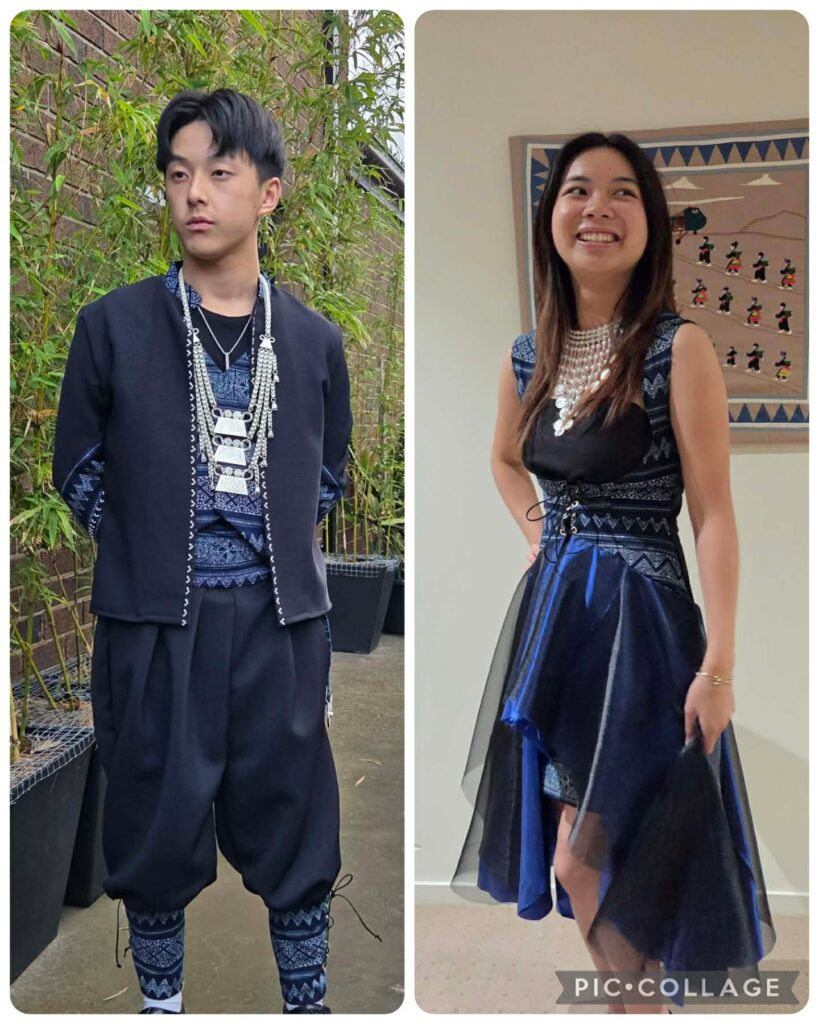
Indigo is central to this collection because it has long been foundational to Hmong textile practice. Hand-dyed indigo cloth—woven, dyed, and patterned through slow, labour-intensive processes—formed the basis of everyday and ceremonial dress. It speaks to endurance, connection to land, and the quiet strength of women’s work passed through generations.
May’s design honours this lineage through a structured bodice and flowing high-low skirt. Traditional geometry meets contemporary femininity, allowing movement and lightness while remaining anchored in craft. This piece is an homage, but not a replication—it reflects how tradition can remain present while evolving in form.
James’ look reinterprets Hmong menswear through modern proportion. Balloon-style trousers reference garments historically designed for movement—farming, travel, ceremony—now refined with cuffed legs and minimalist layering. The focus remains on the indigo textile itself, positioning heritage not as spectacle, but as lived continuity.
Together, these pieces speak to grounding—what holds us steady.
Red as Threshold: Kevin
Red is not a dominant colour in everyday Hmong dress, and it is essential to say that clearly. Unlike in other Asian cultures, where red is widely celebratory or decorative, Hmong use of red is spiritual, rare, and deliberate.
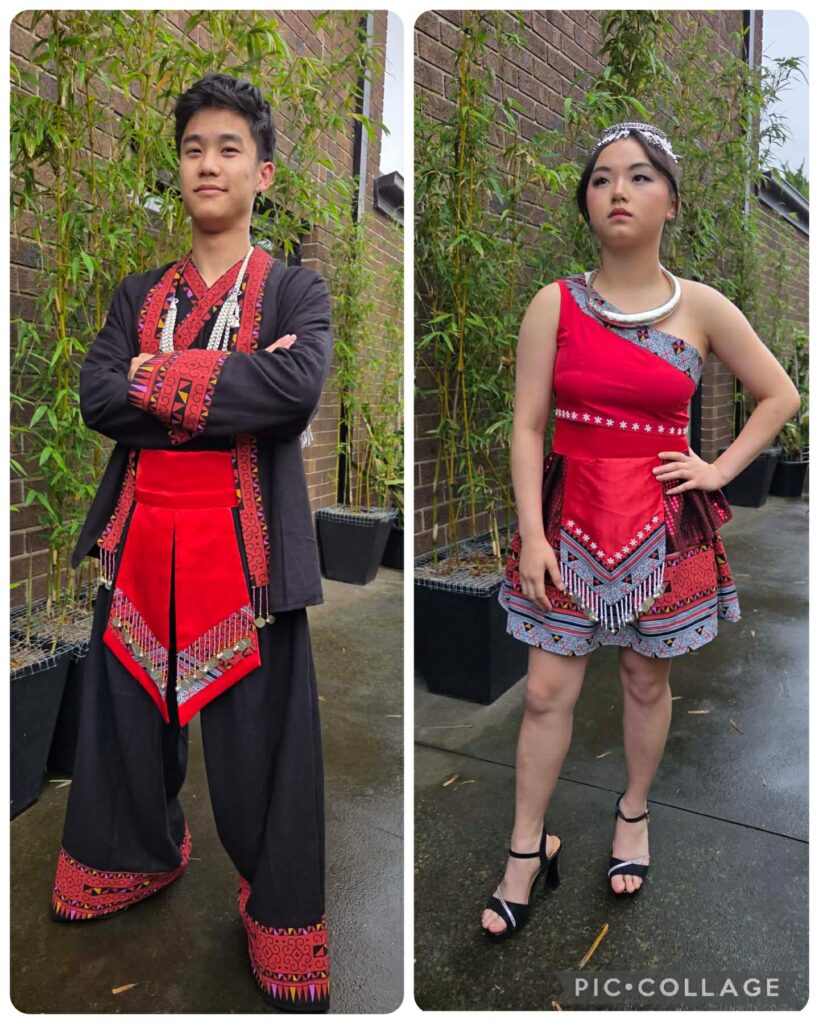
My inspiration comes from a specific spiritual context: the red mask worn by Hmong shamans during ritual practice. In this space, red signals protection, transformation, and the ability to move between worlds. It is not about celebration—it is about spiritual authority and liminality.
Kevin’s design explores red in this charged way. Japanese-inspired overcoat forms and wide-leg proportions create restraint, balance, and stillness. Within that calm structure, bold Hmong motifs are intentionally framed along the edges and in the panels where meaning is concentrated. Red becomes an interruption, an invocation, a presence.
This garment exists between realms: spiritual and material, inherited and reimagined.
The Future Speaks Back: Helena
If the earlier looks are about grounding and threshold, Helena’s design is about voice.
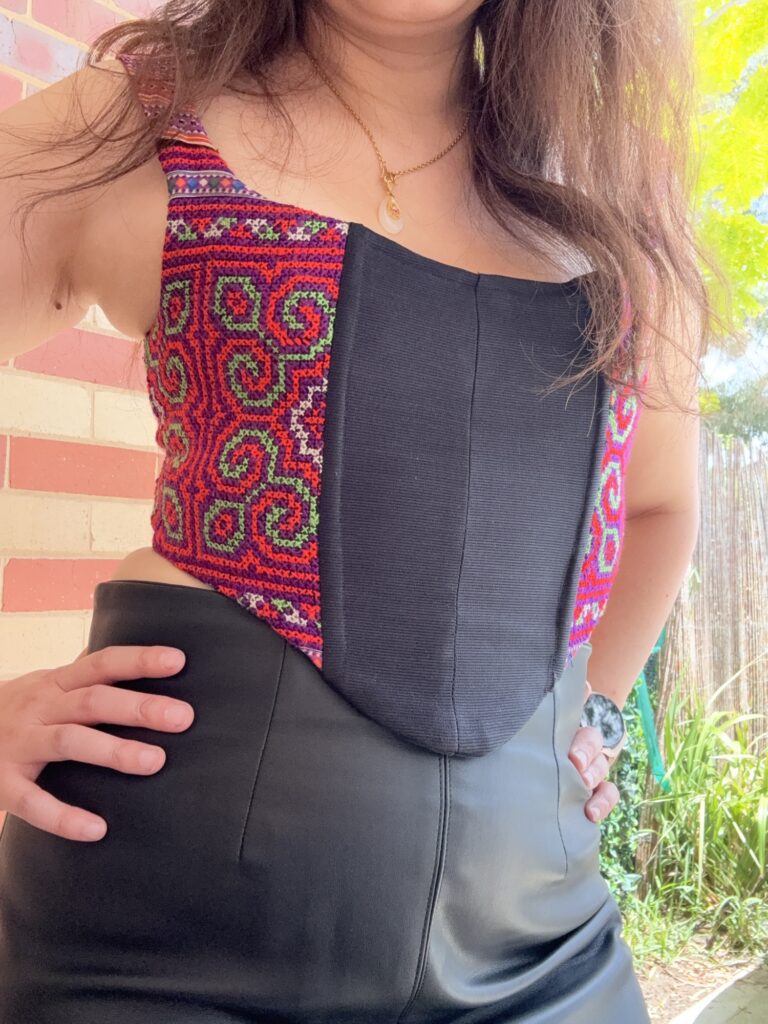
This piece reflects a generational shift—where heritage is no longer something worn only in prescribed ways, but something actively reshaped by youth. The cropped top and mini pleated skirt are unapologetically modern. They signal autonomy, visibility, and confidence.
This is not a tradition being abandoned. It is a tradition that is claimed differently.
Helena’s look asks an important question: What does it mean to honour culture when its old forms no longer bind you?
The answer here is not rejection, but ownership.
Between Threads
Across all four designs, the idea of between remains constant:
- between generations
- between ceremony and everyday life
- between inherited form and personal expression
This collection does not attempt to preserve culture through replication. Instead, it explores continuity through adaptation. The garments are not costumes or recreations—they are contemporary expressions shaped by lived identity.